
What Is the Biopolymer Procedure? A Plastic Surgeon Explains the Risks and the Fix
Posted July 05, 2026 in Body Procedures by Josef Hadeed, MD
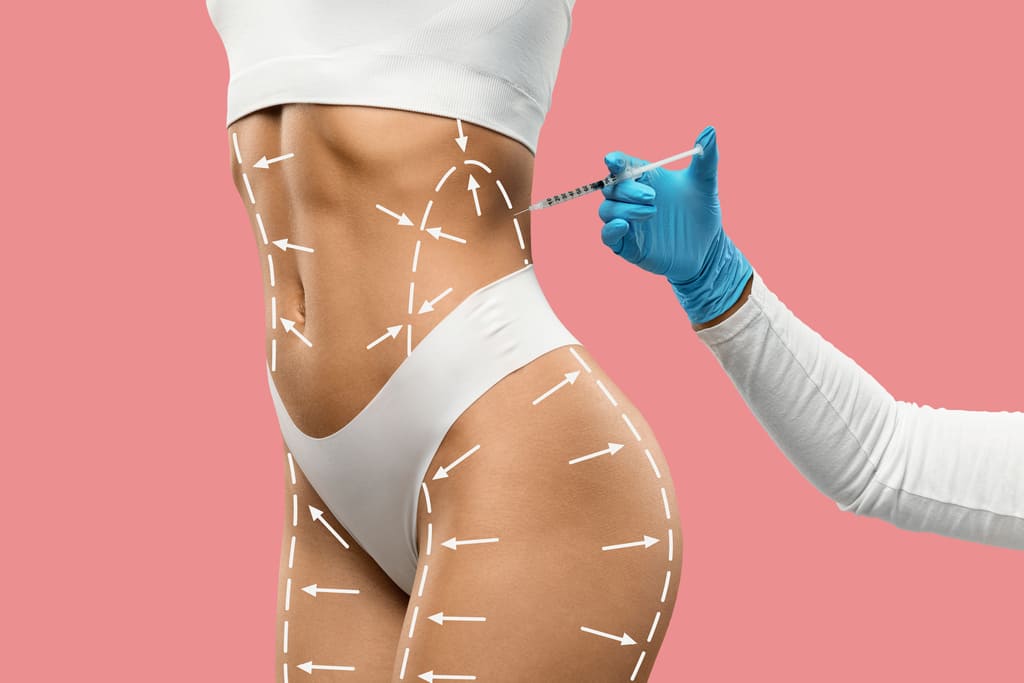
Someone once told you these injections were permanent, painless, and perfectly safe. Maybe they called it “medical-grade.” Maybe the price was too good to pass up. Now you’re reading everything you can find, quietly worried about what’s actually sitting under your skin. You deserve a straight answer.
7 Min Read:
The short version is this: what people call “the biopolymer procedure” is the injection of liquid silicone or similar filler substances to add volume to the buttocks, hips, breasts, or face. It is not FDA-approved. It is illegal to inject into the body this way, and it can cause serious, sometimes permanent harm. The good news is that these materials can be removed, and the affected area can be reconstructed, by a surgeon trained specifically to do it.
That’s the answer many people are searching for at midnight. The rest of this article explains what biopolymers actually are, why the injections are so risky, and what safe removal looks like at Dr. Hadeed’s Beverly Hills and Miami practice.
What Is a Biopolymer, Exactly?
“Biopolymer” is a broad chemistry term, and that broadness is part of the problem. It makes the injections sound clinical and approved when they are neither.
In its real scientific meaning, a biopolymer is a large molecule produced by living organisms: cellulose in plant walls, the collagen in your own skin, DNA itself. Legitimate biopolymers are used across medicine and industry, from dissolvable surgical sutures to food packaging. That’s the honest, textbook definition.
But in the world of illegal cosmetic injections, “biopolymer” has been stretched to cover a very different set of materials. Here it usually means industrial liquid silicone, and sometimes mineral oil, petroleum jelly, or other oily fillers, substances never intended to live inside human tissue. Injectors borrow the respectable-sounding word to make a dangerous product feel safe. The label on the syringe and the reality in your body are two different things.
How Are These Substances Made and Sourced?
People often ask how biopolymer injectables are produced and extracted, usually because they’re trying to understand what’s inside them. The uncomfortable answer is that for illegal injectables, there is no reliable answer.
Genuine industrial silicone is manufactured from silica (essentially refined sand) through controlled chemical processing into a synthetic polymer. That material has real, FDA-approved medical uses, but only when it is sealed inside a protective shell, as it is in a breast implant. The moment “free” silicone is drawn into a syringe and injected loose into tissue, it leaves the world of regulated medicine entirely.
Black-market injectables are often diluted, contaminated, or cut with other oils, and they arrive with no manufacturing standards, no sterility guarantees, and no accountability. That uncertainty is exactly why removal, not monitoring, is the safest path once these materials are in your body.
Why the Injections Are So Dangerous
Silicone and biopolymer injections are advertised as “permanent fillers,” and that word, permanent, is the trap. The material may stay in your body indefinitely, but so can the complications.
Once injected, these substances don’t stay politely in place. They can migrate to other parts of the body, harden into lumps called granulomas, and trigger chronic inflammation. More severe outcomes include soft-tissue infection, tissue death (necrosis), and, in rare cases, silicone traveling into the bloodstream, which can be life-threatening. Some people react within days. Others feel fine for years before symptoms surface. Either way, the material doesn’t become safer with time.
This is worth sitting with, because it reframes the decision. Removal isn’t cosmetic vanity. For many people it’s a genuine health measure.
How Do You Know You Need Removal?
You may not have any symptoms yet, and waiting for one is not the strategy. Still, a few signs mean you should see a board-certified plastic surgeon promptly:
- Persistent pain, tenderness, or a feeling of pressure in the injected area
- Recurring infections or chronic swelling
- Firm lumps or nodules under the skin
- Skin that is changing color, hardening, or breaking down
- Contour changes that suggest the material has shifted or migrated
If any of these sound familiar, it’s worth getting evaluated sooner rather than later. Catching migration or tissue reaction early tends to make removal cleaner and recovery smoother for you.
So What Does the Removal Procedure Actually Involve?
Here’s where the story turns hopeful. Removing illegal injectables is complex, but it is a well-established surgery in experienced hands. As a double board-certified plastic surgeon, Dr. Josef Hadeed tailors the approach to how much material is present, where it sits, and how much surrounding tissue has been affected.
Surgical excision. When there are large deposits, hardened masses, or significant granulomas, Dr. Hadeed removes the material and scar tissue directly through carefully planned incisions, then reconstructs the area. This is the most thorough option for concentrated deposits, though it involves more downtime.
Ultrasound-guided removal. High-resolution ultrasound lets Dr. Hadeed see precisely where the material is hiding before removing it. Because he can target the deposits directly, this approach is often less invasive and leaves less scarring, a good fit for smaller or harder-to-locate pockets.
VASER® ultrasound-assisted liposuction. For material dispersed through a wider area, VASER® energy liquefies the silicone and scar tissue so it can be suctioned out with power-assisted liposuction. Sometimes a skin-tightening step with Renuvion® follows to refine the contour.
Combined and staged techniques. Real cases are rarely tidy. Dr. Hadeed often blends methods, and some patients need more than one session to clear everything and rebuild the shape of the area. He’ll map that plan out with you rather than promising a one-visit miracle.
What Recovery Looks Like
Most silicone and biopolymer removals are outpatient, so you go home the same day. Expect some soreness manageable with medication along with swelling and bruising that generally settle over a couple of weeks. You’ll wear a compression garment to support the tissue and control swelling, rest for about a week, and ease back to your normal routine over roughly four to six weeks. Fuller results appear as the swelling resolves, usually across three to six months.
The point of all this detail is reassurance: there is a structured, medically sound way out of a decision you may deeply regret.
Common Questions About Biopolymer Removal
Is it too late to have old injections removed?
It’s rarely too late. Even injections placed years ago can be removed, though longstanding material and scar tissue can make the surgery more involved. An evaluation is the only way to know your specific situation.
Can all of the biopolymers be taken out?
Complete removal is the goal, and it’s often achievable, but it depends on how far the material has migrated and how diffuse it is. Some cases require staged procedures to remove as much as safely possible while protecting healthy tissue.
What are the safe alternatives I should have used instead?
FDA-approved options exist for nearly every goal these injections falsely promise: fat transfer for the buttocks, hips, or face, dermal fillers from reputable providers, and implants for breast or buttock augmentation. The difference is regulation, sterility, and a surgeon who’s accountable for your outcome.
Will insurance cover removal if I’m having symptoms?
Coverage varies widely and depends on your plan and whether removal is deemed medically necessary. Our team can talk through the specifics, and financing options are available so cost doesn’t force you to wait.
How do I make sure I never end up here again?
Only receive injectables from a board-certified plastic surgeon or a trained, reputable provider, always confirm the product is FDA-approved, and walk away from bargain prices or “filler parties.” When something sounds too good to be true, your safety is usually the hidden cost.
Take the Next Step Toward Safe Removal in Beverly Hills or Miami
If you’re carrying illegal injectable material, the most powerful thing you can do is get an honest evaluation from a surgeon who removes it regularly. Dr. Josef Hadeed, performs safe silicone and biopolymer injection removal and reconstruction at his Beverly Hills and Miami offices. Call (310) 970-2940 or request a consultation online to find out what your options are.
