
Gynecomastia vs Chest Fat: How to Tell the Difference
Posted August 29, 2026 in Services for Men by Josef Hadeed, MD
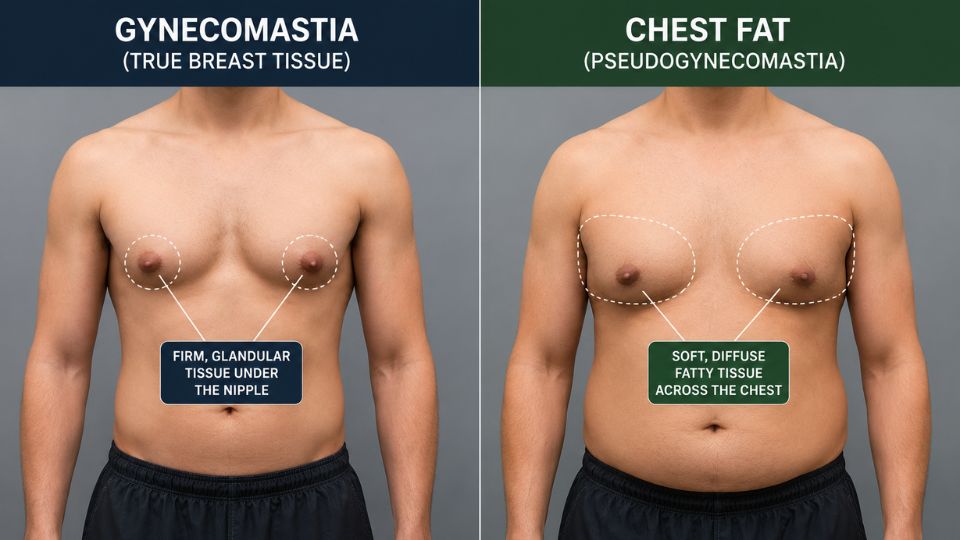
You’ve stood in front of the mirror, pressed on your chest, and wondered the same thing thousands of men do: is this just fat I can train away, or is it something more? It’s a genuinely confusing question, and getting the answer right changes everything about what to do next. Let’s settle it.
9 Min Read:
Gynecomastia is enlarged glandular breast tissue that feels firm and sits under the nipple, while chest fat is soft, spreads across the chest, and responds to weight loss. The distinction matters because gynecomastia does not shrink with diet or exercise and usually needs surgery, whereas pure chest fat often improves with lifestyle changes. Knowing which you have is the first step toward the right treatment for enlarged male breasts.
The Core Difference: Gland vs Fat
Understanding what each tissue actually is makes the rest straightforward.
Gynecomastia is the overgrowth of glandular breast tissue, driven by a hormonal imbalance between estrogen and testosterone. It forms a firm, rubbery mass concentrated beneath and around the nipple. Chest fat, by contrast, is ordinary subcutaneous fat, the same kind stored anywhere else on the body. It is soft and distributed more broadly across the chest, and it expands or shrinks with your overall weight.
The reason this matters so much is simple. Fat responds to a caloric deficit. Glandular tissue does not. You can get genuinely lean and still have a firm disc under each nipple if that tissue is glandular. Dr. Hadeed sees many men who spent years dieting and training against a problem that was never going to respond to either.
How to Tell Them Apart at Home
You can gather strong clues yourself, though only an exam confirms it.
The Texture Test
Pinch and press the tissue behind and around the nipple. Glandular tissue feels firm, dense, and rubbery, almost like a flattened disc or a hard knot. Fat feels soft and pliable, and it doesn’t have a defined edge. If you feel a distinct firm mass centered under the nipple, that is a classic sign of gynecomastia.
The Location Test
Gynecomastia concentrates directly under and around the nipple and areola. Chest fat spreads more evenly across the whole chest and often blends into the fat of the flanks and upper abdomen. Fullness that is focused at the nipple points toward the gland. Fullness that is generalized points toward fat.
The Weight-Loss Test
This is the most telling clue over time. If you have lost weight and the chest fullness melted away with the rest of your body fat, it was fat. If you slimmed down everywhere but a firm bulge under the nipple stubbornly remained, that is glandular tissue, and it will stay until it is surgically removed.
Why Many Men Have Both
Here is where it gets real, because the two rarely stay in separate lanes.
Excess body fat does more than sit on the chest. Fat tissue converts testosterone into estrogen, and higher estrogen can stimulate glandular growth. So a man carrying extra weight may develop both a layer of chest fat and true glandular gynecomastia at the same time. This overlap is exactly why the texture and location tests can be muddy and why professional assessment matters. Treating one component while ignoring the other leaves an incomplete result.
Why the Difference Changes Treatment
The gland-versus-fat answer determines the entire treatment plan, which is the whole reason to sort it out.
If the fullness is pure fat, weight loss may resolve it, and stubborn deposits that resist dieting can be removed with liposuction. If glandular tissue is present, liposuction alone cannot remove it, because the gland is too firm and fibrous to suction. That requires direct surgical excision, the core of gynecomastia surgery. Most men with true gynecomastia need a combination: excision to remove the gland and liposuction to blend the contour. Our complete guide to gynecomastia surgery covers causes, candidacy, and cost, and the gynecomastia surgery treatment and recovery article walks through the operation itself.
Can Pseudogynecomastia Be Treated Without Surgery?
Pseudogynecomastia, the medical term for chest fullness caused by fat alone, is the one version that lifestyle can genuinely improve. Sustained fat loss reduces it, and for stubborn remaining fat, liposuction offers a targeted fix. The key is confirming there is no glandular component hiding underneath, because that part will not budge.
When to See a Surgeon
A quick self-check is useful, but certain signs mean it’s time for a professional opinion.
See a plastic surgeon if chest fullness has persisted more than a year, if you feel a firm mass under the nipple, if the fullness remains despite reaching a lean weight, or if there is tenderness or a one-sided change. A rapidly growing, hard, or fixed mass should always be evaluated promptly to rule out other causes. Dr. Hadeed, who is board certified in plastic surgery, examines the tissue, reviews your history and medications, and gives you a definitive answer on gland versus fat.
Frequently Asked Questions
How can I tell if I have gynecomastia or just chest fat?
Gynecomastia feels like a firm, rubbery disc directly under the nipple and doesn’t shrink with weight loss. Chest fat feels soft, spreads evenly, and responds to diet and exercise. A firm mass that persists when you’re lean points to gynecomastia.
Can chest fat turn into gynecomastia?
Fat doesn’t become glandular tissue, but they often occur together. Excess weight can raise estrogen, which may stimulate glandular growth, so some men have both at once.
Will losing weight get rid of gynecomastia?
Weight loss reduces chest fat but cannot remove glandular tissue. If a firm disc remains under the nipple after you slim down, that is gynecomastia, and surgery is the reliable removal.
Do I need surgery for chest fat?
Not always. Pure chest fat often improves with weight loss, though liposuction can remove stubborn deposits. Surgery becomes necessary when glandular tissue is present, which doesn’t respond to lifestyle changes.
Get a Definitive Answer, Not Another Guess
You could keep pressing on your chest and wondering, or you could find out for certain in a single visit. Dr. Josef Hadeed, a board-certified plastic surgeon in Beverly Hills and Miami, will tell you exactly whether you’re dealing with gland, fat, or both, and what actually works for each. Settle the question by calling (310) 970-2940 or requesting a consultation.
